Loading...
Serving Eastern Goleta Valley, CA and surrounding areas. (805) 261-5199
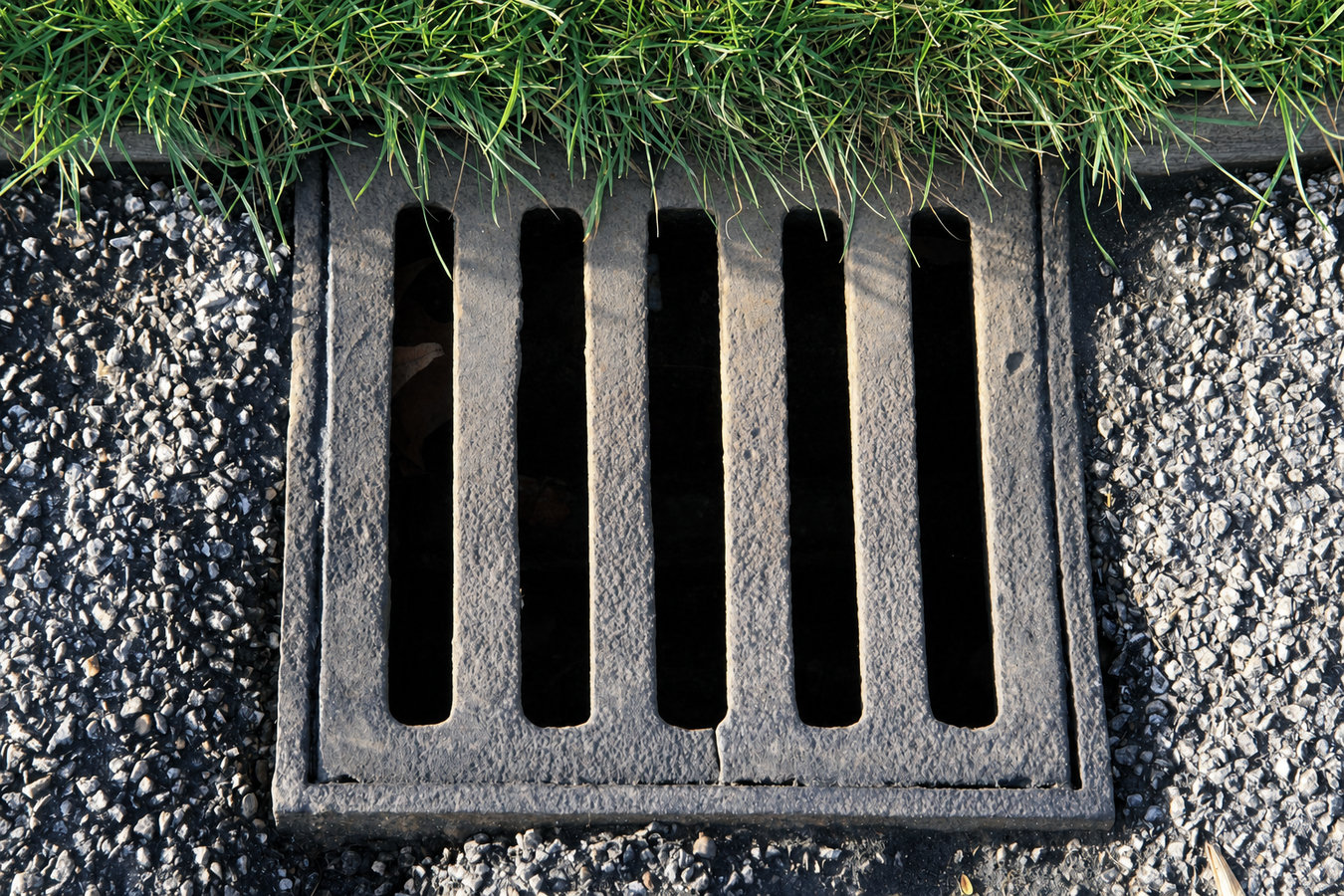
Water pooling on your driveway or running toward your home damages pavement and foundations. We design and install drainage systems that protect your property season after season.
Drainage solutions in Eastern Goleta Valley redirect water away from your pavement and foundation using channel drains, catch basins, regrading, and underground pipe, most jobs complete in one to three days.
In Eastern Goleta Valley, nearly all of the year's rain falls between November and March, often arriving in heavy bursts that overwhelm surfaces not built to handle that kind of intensity. If water is pooling on your driveway or heading toward your garage, the problem is not usually slope - it is that water has nowhere to go at the end of that slope. Drainage solutions fix the whole path the water travels, not just the surface you can see.
Left unaddressed, standing water softens the base beneath your asphalt, leading to cracking, sinking, and eventually full replacement. Pairing proper drainage with our grading and excavation work gives your pavement the stable, dry foundation it needs to last.
If standing water appears on or beside your driveway after a storm, the surface is not draining the way it should. In Eastern Goleta Valley, where winter storms can be intense and fast, that pooling puts real stress on your pavement base every season it continues.
Cracks that appear near the edges or in patterns - not random surface wear - often signal that water is getting under the pavement and weakening the base. The clay-heavy soils common in the Goleta Valley make this worse, because wet soil shifts and takes the asphalt with it.
If rain flows across your driveway and heads toward your garage door, foundation, or front entry, that is a drainage problem that goes beyond the pavement. Water near a foundation in clay soil causes ground movement that can crack walls and shift slabs over time.
Washed-out gravel, bare soil, or a crumbling asphalt edge after a rain event means water is running off the surface too fast and in the wrong direction. On sloped lots near the Santa Ynez Mountain foothills, this kind of edge erosion can accelerate quickly once it starts.
Every drainage problem has a specific cause, and the fix has to match it. For driveways with a low point that has nowhere to drain, a channel drain or catch basin at that spot - connected to an underground pipe - is often the most reliable answer. For hillside lots where water arrives from uphill before it ever touches your pavement, an interceptor drain placed above the driveway stops the problem before it reaches the surface. We also work alongside our speed bump installation and grading and excavation services when a full-site approach is needed.
For properties where the existing surface slope is simply wrong - draining toward the house instead of away - regrading the asphalt or adjusting the sub-base solves the problem at the source. We assess the full water path from entry to exit before recommending anything, so you are not paying for work that only moves the problem a few feet.
Best for driveways with a consistent low edge where water collects before it can exit.
Ideal for properties with a single low point where water gathers during and after heavy rain.
Suited for driveways where the slope is incorrect and water runs toward the structure rather than away.
Right choice for hillside lots where water from above reaches the driveway before any surface drain can catch it.
Eastern Goleta Valley sits between the Pacific coast and the Santa Ynez Mountains, which means it gets the worst of both worlds when it comes to water. Winter storms drop the area's entire annual rainfall in a few months, often in intense bursts. The soils through much of the valley contain significant clay, which absorbs water slowly and swells when it does - putting pressure on pavement from below while water sits on top. Properties on or near the foothills face an additional challenge: runoff arrives from uphill with speed and volume, and a drain sized for a normal rain event may be overwhelmed in a heavy one. Residents of Goleta and Montecito face these same conditions, and we design systems for how this region actually behaves.
The broader Santa Barbara area has also seen significant wildfires in recent decades, and burned hillsides shed water far faster than vegetated ones. If your property sits downhill from fire-affected terrain, a drainage system designed for normal rain may be undersized for the surge that follows a burn event. We account for local conditions - clay soils, slope, post-fire runoff risk - when sizing and placing every drain, because a system that only works in mild storms is not really solving the problem. For information on California stormwater regulations that may apply to drainage work, the California State Water Resources Control Board outlines the rules for private property drainage.
Describe where the water is pooling or what damage you have noticed. We reply within one business day and schedule a site visit - ideally when you can show us the problem area.
We walk your property, trace the full path water travels, and identify where it needs to exit. You get a written proposal explaining what will be installed and where the water will go - no vague answers.
If your project requires a permit - more likely when connecting to a public system or altering how water leaves your lot - we handle the application. We tell you upfront whether a permit is needed so there are no surprises mid-project.
The crew installs drains, pipes, and any asphalt patching, then tests the flow before leaving. We walk you through what was installed, where the water exits, and what periodic maintenance keeps the system working.
Free estimate. Written proposal. No pressure to sign on the day.
(805) 261-5199Clay soils, sloped foothill lots, and concentrated winter storms are the specific challenges drainage work here has to address. We size and place every drain for peak storm flow, not just the average rain you get in a mild year.
California requires paving and drainage contractors to hold an active state license before working on your property. You can verify our license status at any time on the CSLB website - that transparency matters when someone is cutting into your driveway.
We explain exactly where the water will go before we ask for your approval. A vague answer to that question is a red flag in drainage work, and we have never given one. Scope, materials, and timeline are in writing before the crew arrives.
We have worked on driveways and paved surfaces throughout this valley long enough to know the neighborhoods, the soil conditions, and the seasonal patterns that affect how water moves across local properties. That local familiarity shows up in how we design each job.
These proof points add up to a simple guarantee: your drainage system is designed for how your specific property actually behaves, built to last through the winters Eastern Goleta Valley actually delivers, and backed by a contractor you can verify and trust.
Add safety features to your paved surface while it is already being worked on.
Learn MoreCorrect the sub-base grade so water drains away from your pavement at the source.
Learn MoreWinter storms in Eastern Goleta Valley arrive fast and hard - call us now to assess your property while the weather is still on your side.